Rose Rocket Platform
A re-imagined TMS platform for shippers, brokers, and carriers.
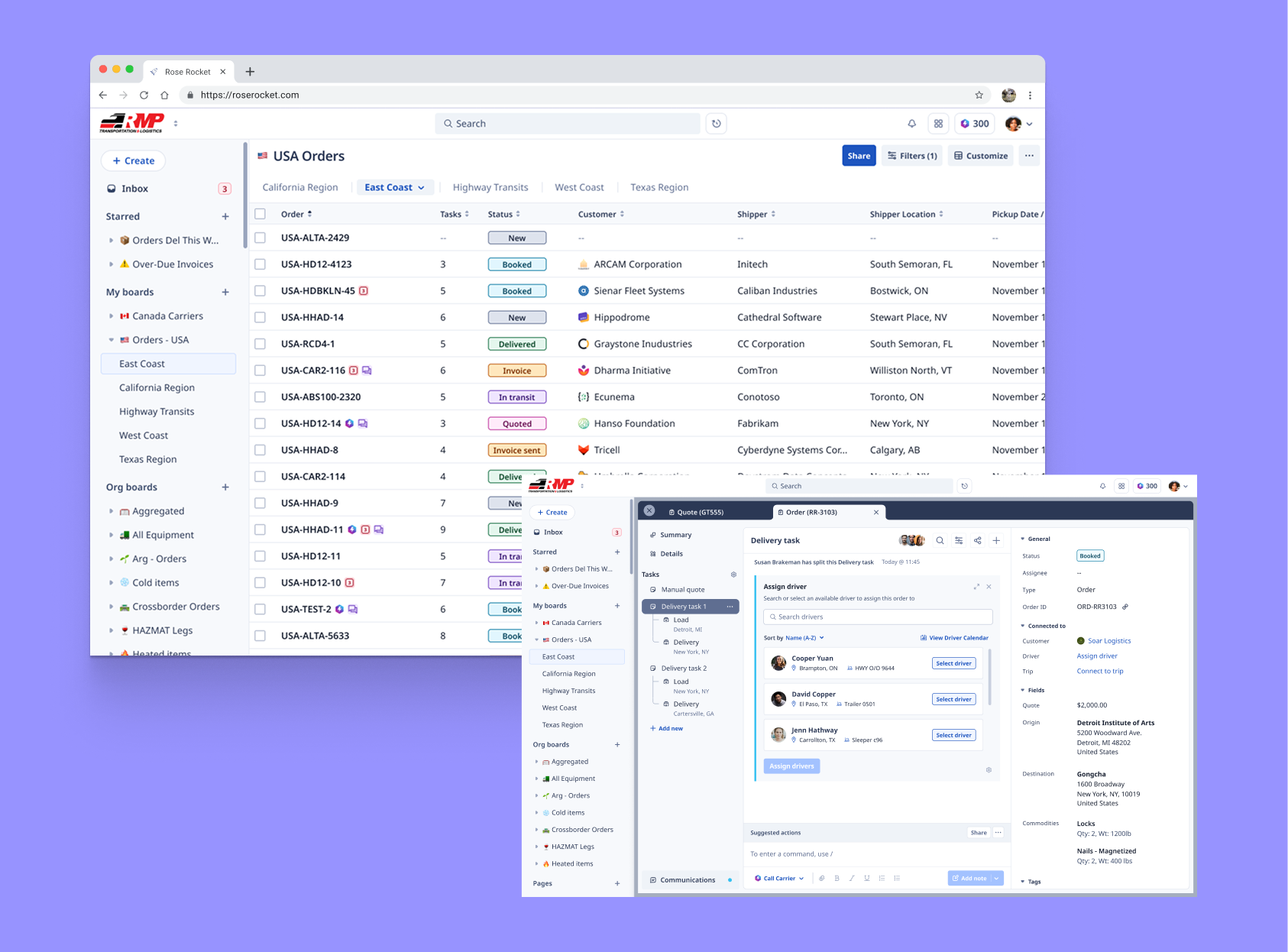
Overview
Rose Rocket is a transportation management system (TMS) used by shippers, brokers and carriers to manage their freight operations.
Overtime, the platform has become rigid and difficult to use because of its fixed workflows. Navigation that opens up too many tabs in your browser and making changes to a shipment requires several many clicks.
My role alongside one other designer was to redesign the core platform experience by making it easier to navigate and saving time for our customers by allowing them to edit things quickly across the platform. Another layer I had to consider in my design was to design a universal component that is easy for our developers to build and maintain well into the future.
Problem
We couldn't speak to customers directly at the start of this project so we held stakeholder interviews by talking to our sales and CX team to understand our customers challenges. They're the ones who talk to existing and prospective customers every day. Here's what we heard from them:
- Searching and filtering for shipment views was slow and cumbersome — too many clicks to get to the right thing
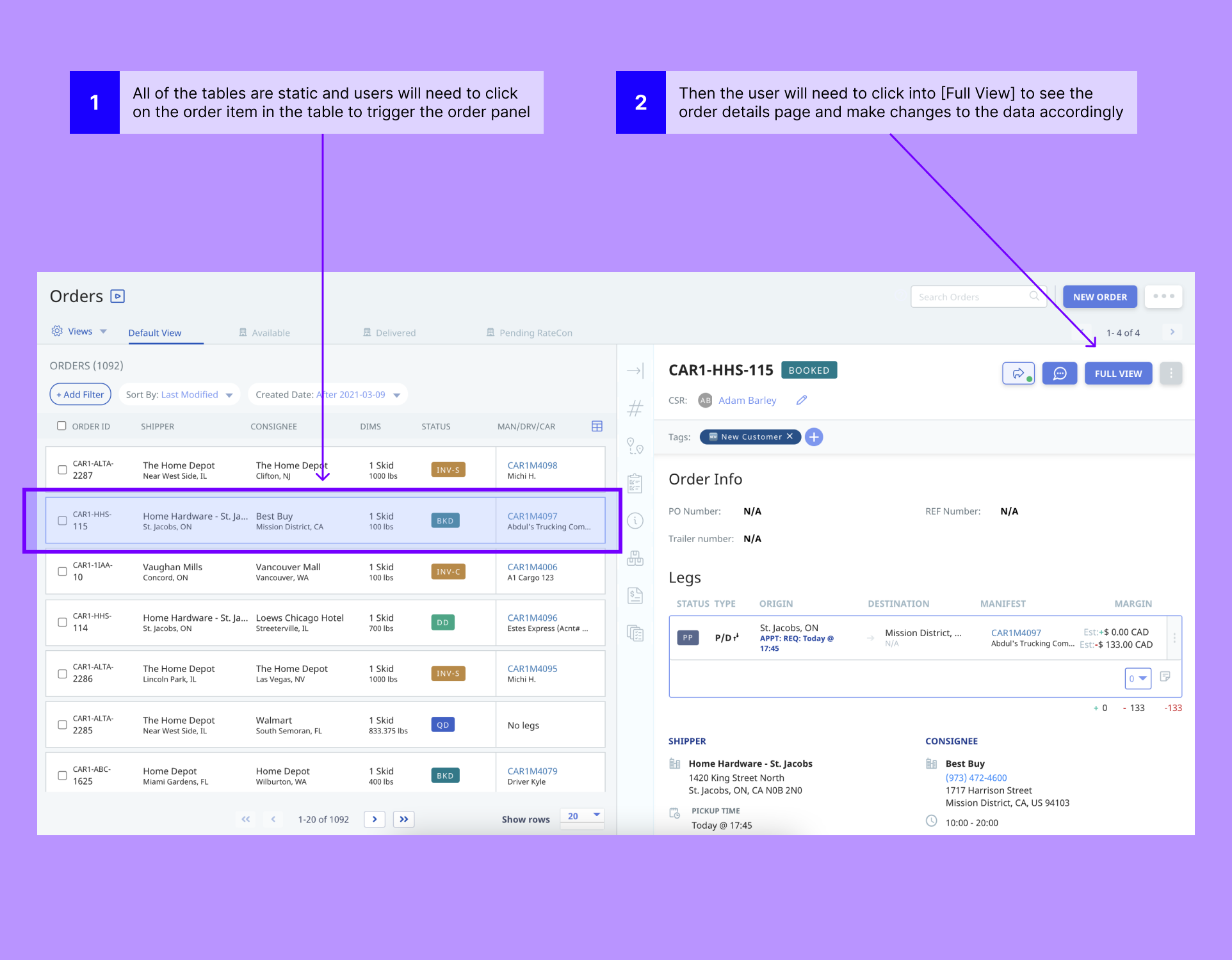
- Tables were completely static and it was frustrating having to drill into each order to update a field
- People never close their tabs and often get lost between shipment orders
Systems thinking
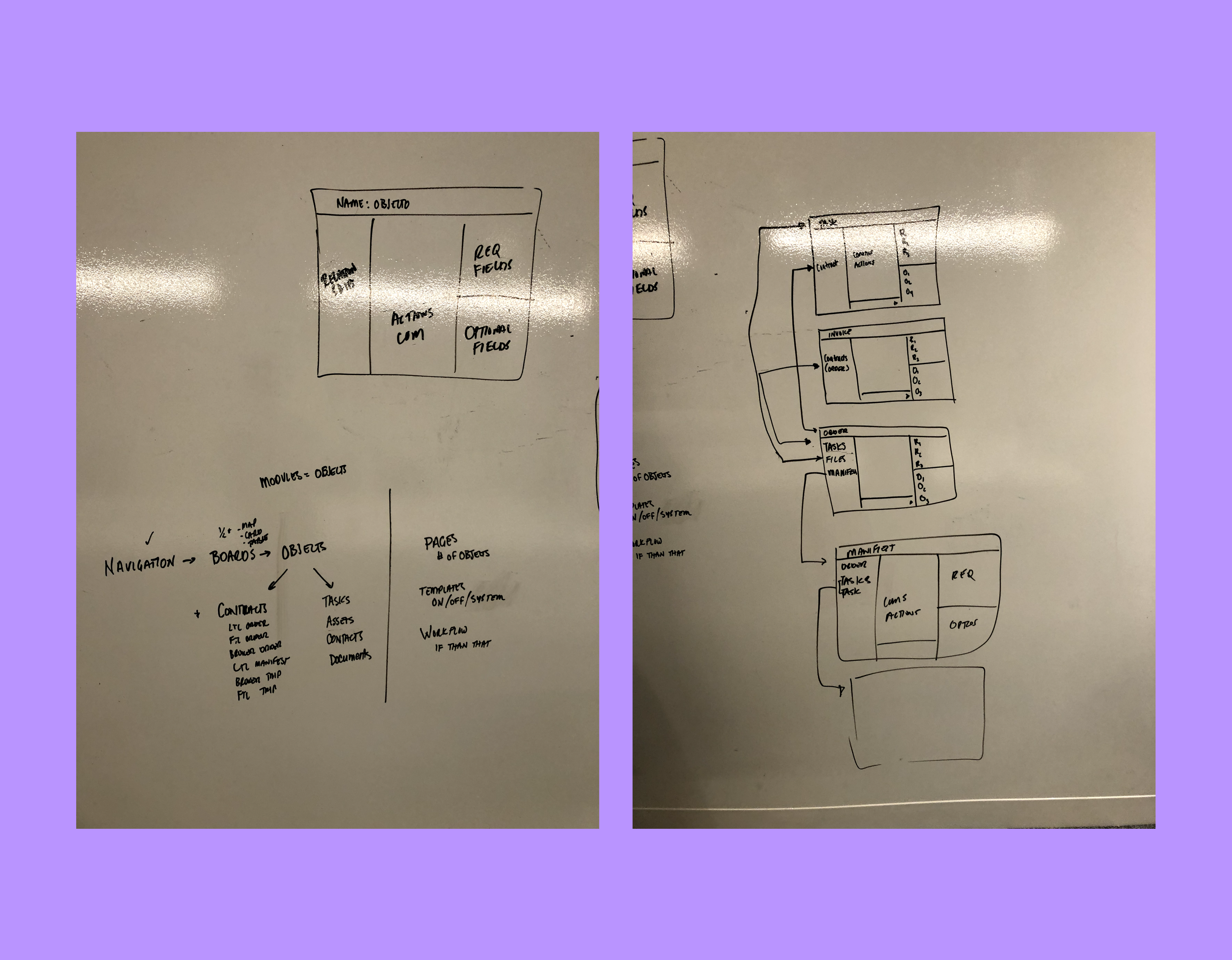
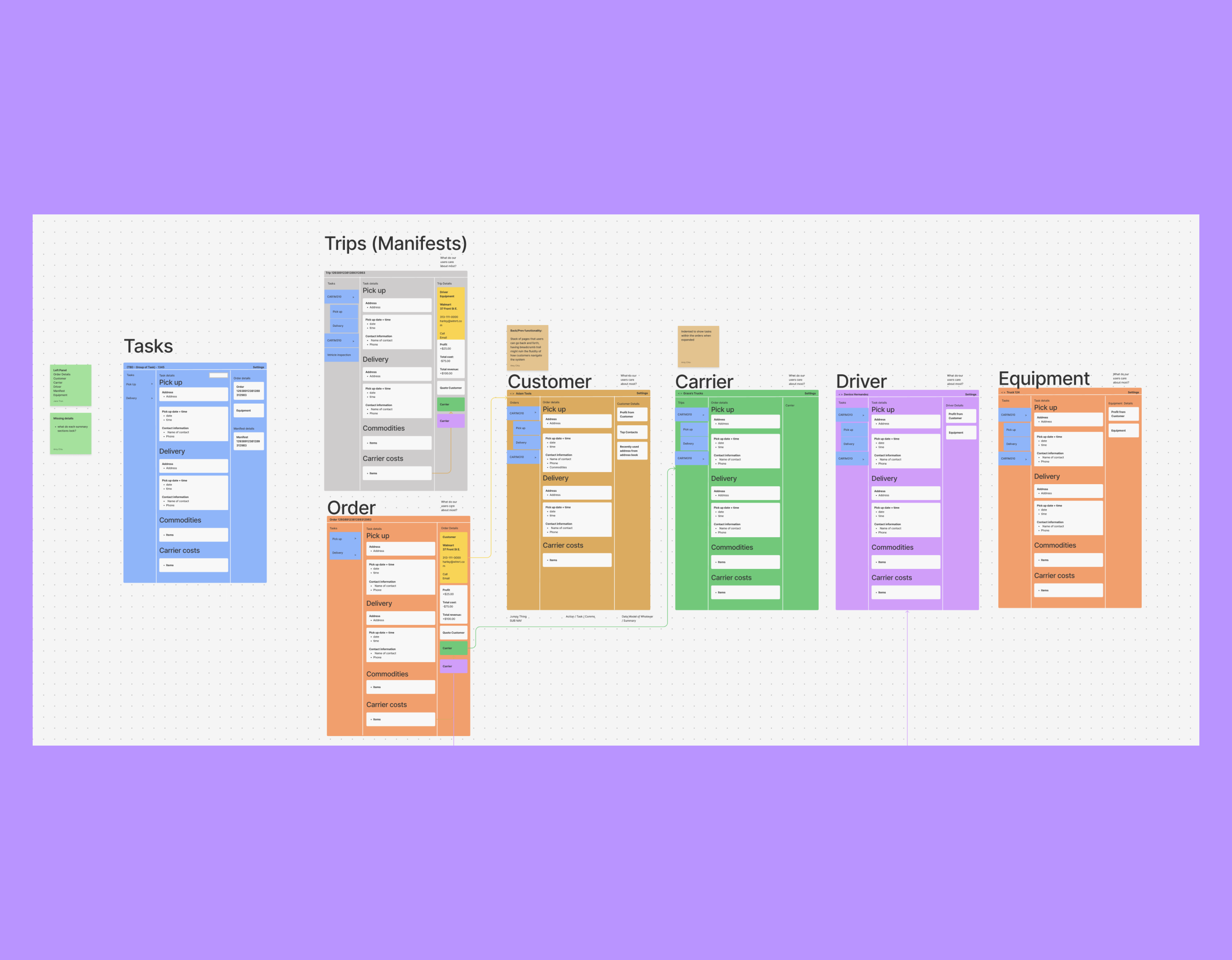
We had to map out the whole system and figure out how the different types of objects in the platform can relate and connect to one another.
Types of objects we had in our platform were: Orders, Manifests, Customers, Carriers, Drivers, Equipment, and Tasks.
With the existing platform, each object type looks different and behaves differently which makes it difficult for our developers to maintain and update over time, so we wanted to design and create a universal component that shared the same layout but housed different information depending on the object type.
Design
By using the existing design system as a foundation, we were able to take the existing components and modify it to fit our design vision, allowing us to ground all of our design thinking through high-fidelity screens to share progress and concepts with our stakeholders.
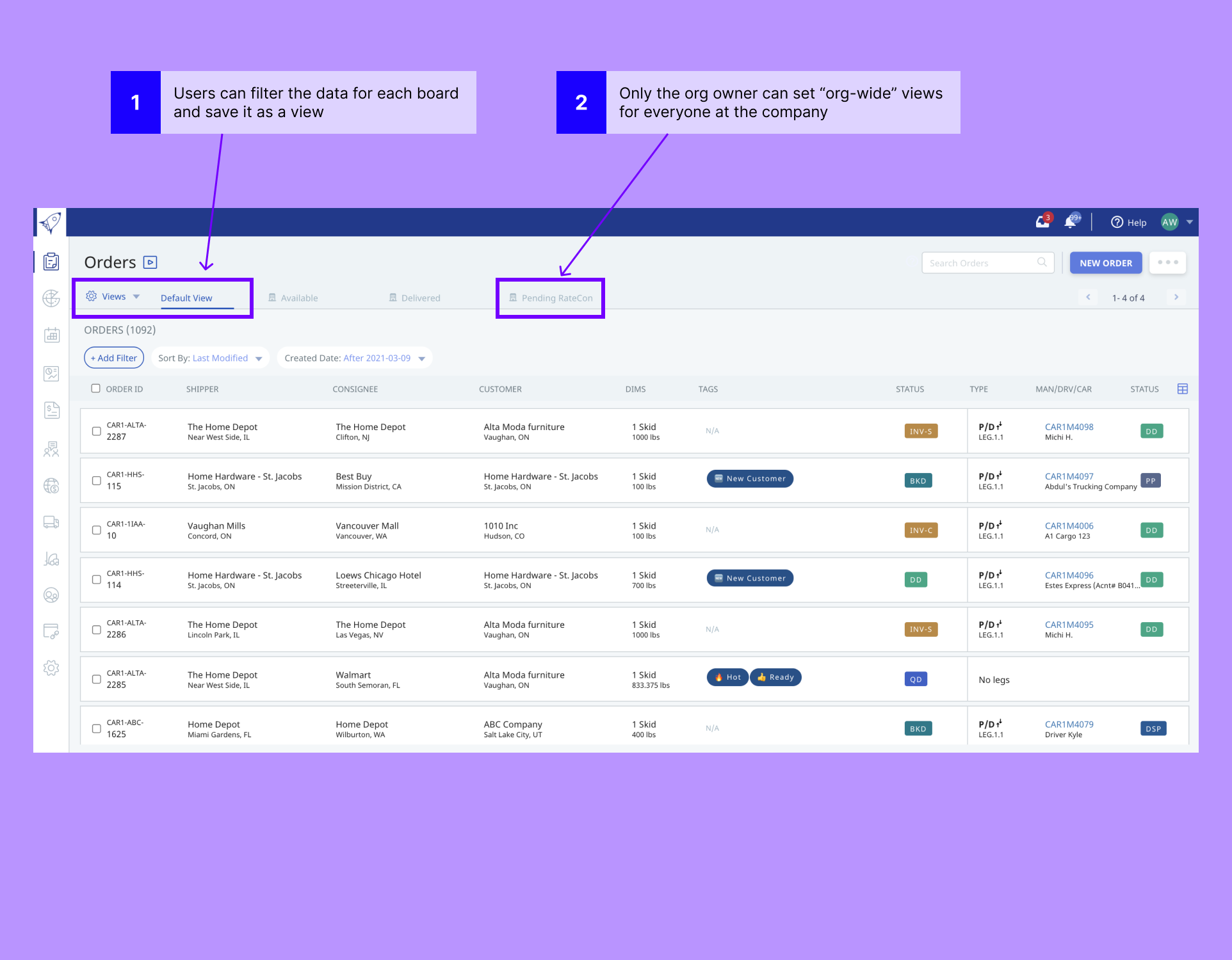
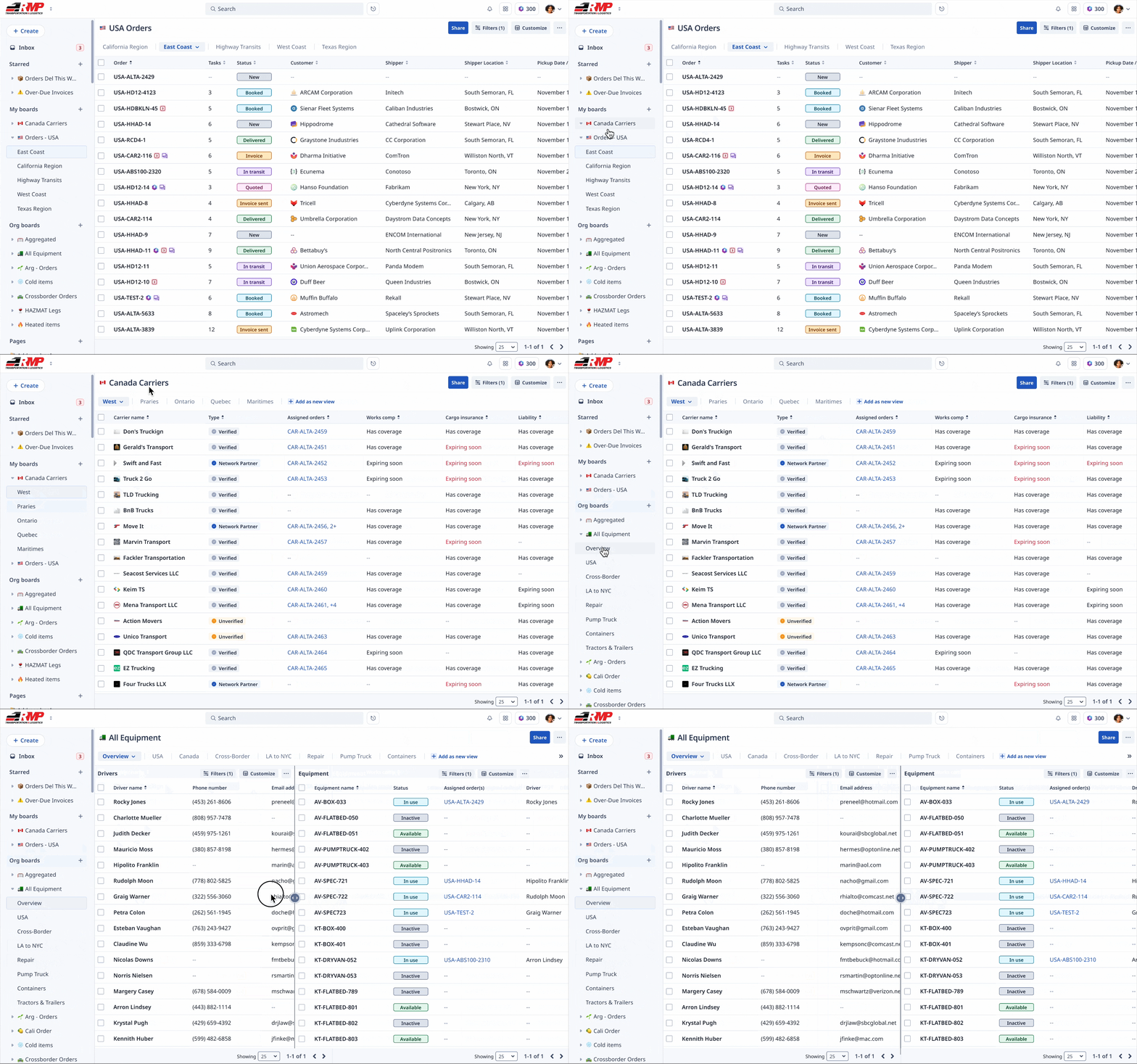
Boards - your saved view of shipments
In order for customers to save their views, they had to create and save it after setting filters. Every user shares the same views dropdown, making it difficult to find the one you want.
The new configurable boards is isolated to each logged in user and lets them create as many boards they want without needing to see everyone else's saved views or boards. Boards can also be shared so others can see them if they want to.
Tables that let you edit on the spot
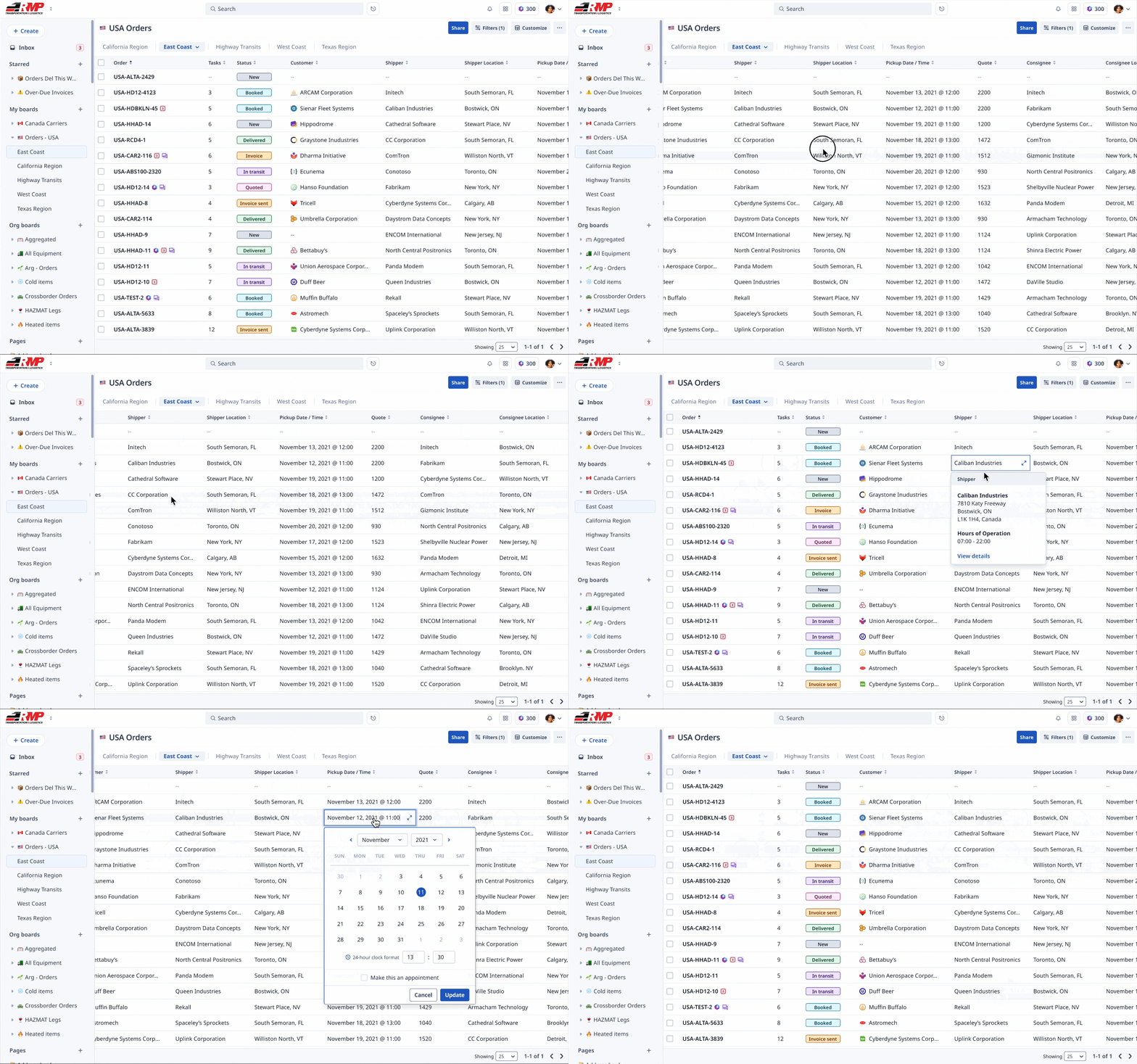
The old tables were read-only. You could see the data, but to change anything, you had to open the full order record, make your edit, save, and navigate back.
The new tables let you click into a row to see a summary of the order, and double-click into any cell to edit it directly. It sounds simple, but this one change was consistently the thing customers responded to most positively in testing.
Tabs that keep you oriented
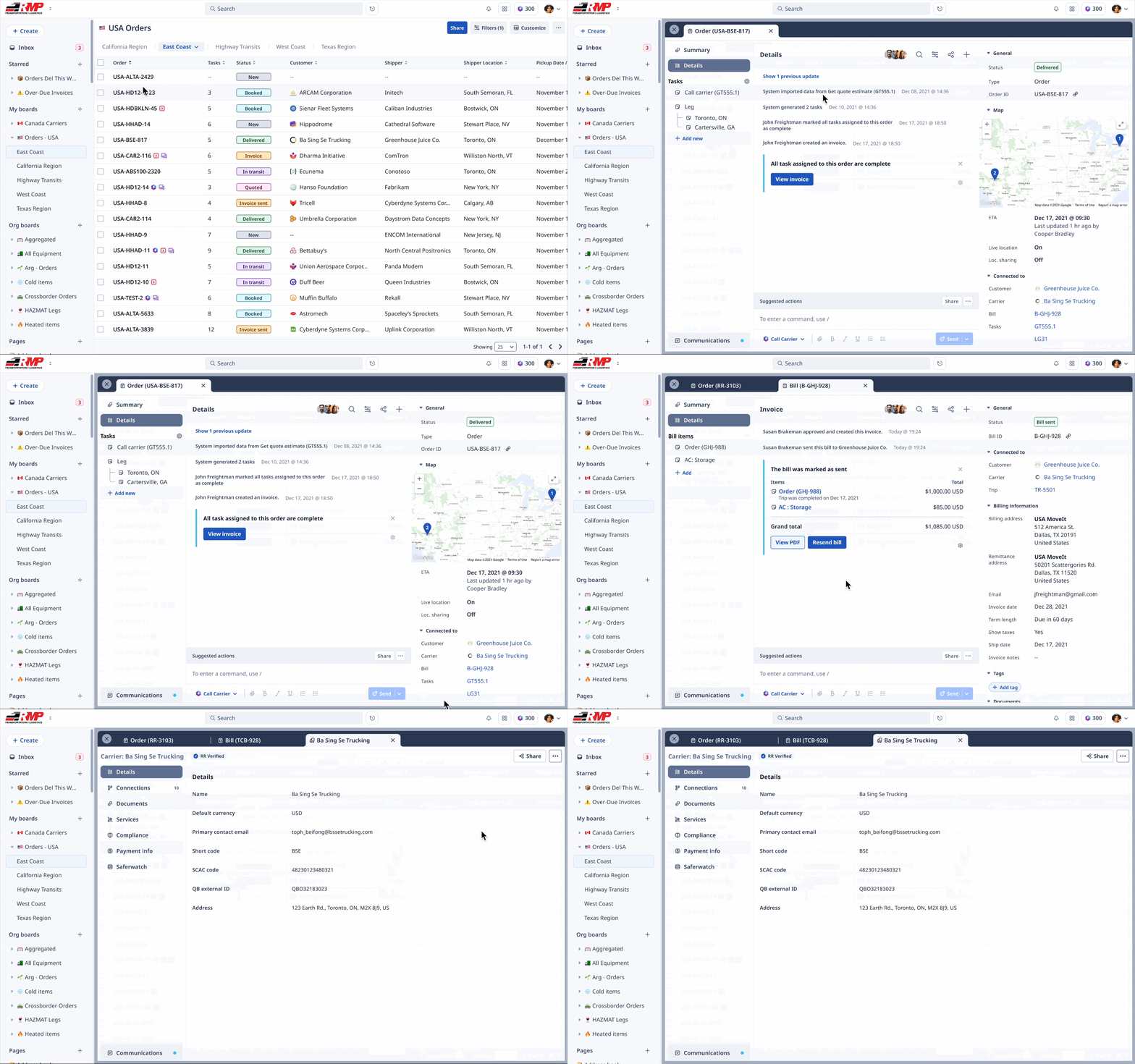
Moving between orders was disorienting. New windows opened, previous ones piled up, and it was easy to lose track of what you'd been doing.
A in-platform tabbed experience is introduced here, a familiar pattern from browsers but instead of linking you out to a new tab or window, a new tab is created inside the TMS, helping users see what they last viewed.
Customer feedback
We built a prototype and put it in front of our customers to get their intial feedback on the overall design and direction of the newly evolved platform experience.
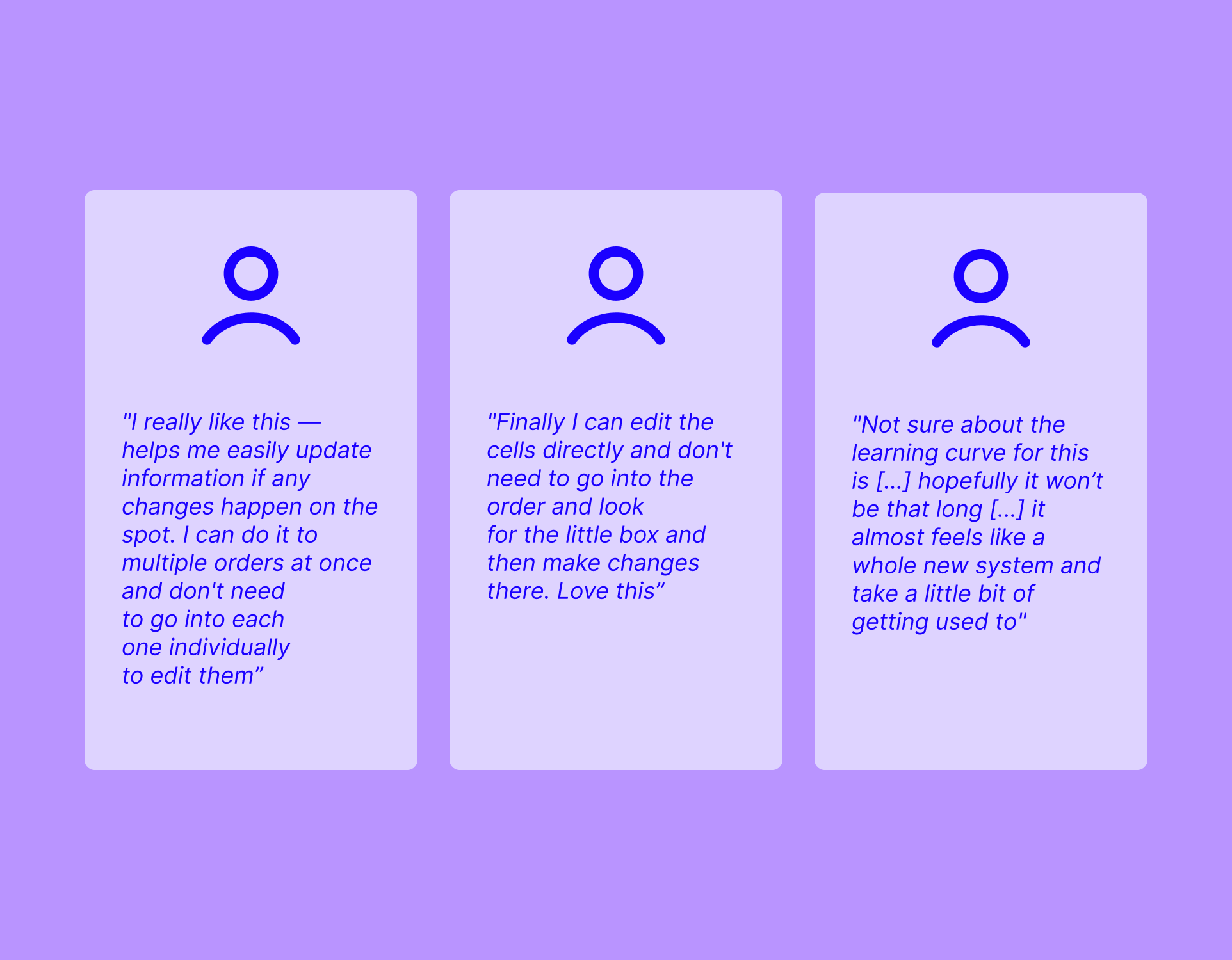
Here's what we heard from our customers:
- Inline table editing was a huge hit, customers loved being able to edit multiple orders without clicking into each one
- Shared boards made it easier for them to collaborate with their team and cover for them while they're away
- It feels like an entirely new platform and everyone we tested with was worried about the steep learning curve that it would introduce
Rollout strategy & outcomes
Based on the testing feedback we heard from customers and the worry around the learning curve that was mentioned, I recommended to
our team that we create a dedicated team paired with an opt-in beta program. This allows us to keep working on the existing TMS
for current customers while we work on building the new platform experience, and with the opt-in beta program, we can test live with
customers who are interested in trying it out.
Once the designs were finalized and with the approval from the CEO, Rose Rocket formed a dedicated team to work on building
out the new platform experience and using our designs as the foundational design blueprint to start building out a live version.
Acknowledgements
To Jane, my design partner on this project, thanks for jamming with me during our daily check-ins, it was so much fun working with you.
To the executive team, engineering team, and trucking experts who joined our check-in meetings — thank you for your time and your candid feedback. Every conversation helped sharpen our thinking and push the concept further than we could have gotten on our own.
And to the sales and customer solutions team at Rose Rocket — thank you for your feedback and giving us insight into our customers' needs and challenges.