DidThis
A journaling app for cozy web hobbyists.
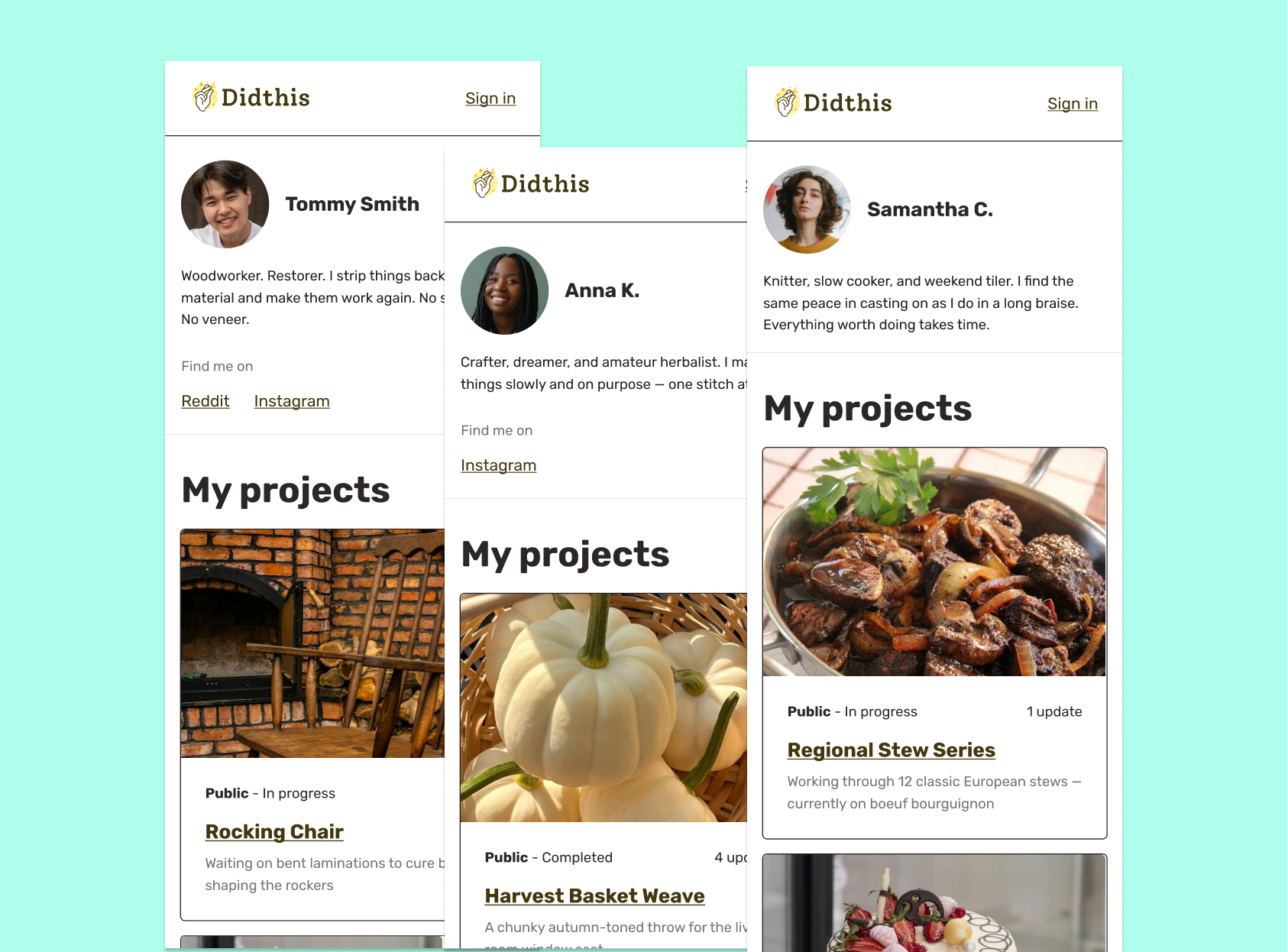
Overview
Mozilla — the organization behind Firefox — has always cared about a healthier internet. In 2022, they set out to explore what that might look like in the world of social media.
DidThis was created as a project journaling app for hobbyists—knitters, woodworkers, painters, restorers, home cooks—who wanted to document their work and share it with people they cared about and who they wanted to share their progress with.
I led the design from the very first conversations about how to approach this problem, all the way through to its launch as a responsive web app and later as an iOS app.
Problem
Social media started off as a way to build connections and share your life with others but it quickly became a digital space for people to perform for an audience, build a brand and make money.
Hobbyists are a specific kind of person. They're passionate about what they make but have zero interest in turning it into a brand. They want to connect with people who share their obsession and they aren't tech savvy enough to build their own website to share their hobby projects.
How might we help hobbyists share their hobby projects online with others in a safe and supportive space that celebrates the journey of learning, creating and connection?
Research and strategy
Narrowing in on the right set of hobbyists
We started off broad at first as we didn't know who to target but we knew we wanted to solve problems in the social media space.
We interviewed people on UserTesting.com and over time we narrowed in further and further until we found a specific group of hobbyists who were the most affected by current social media platforms.
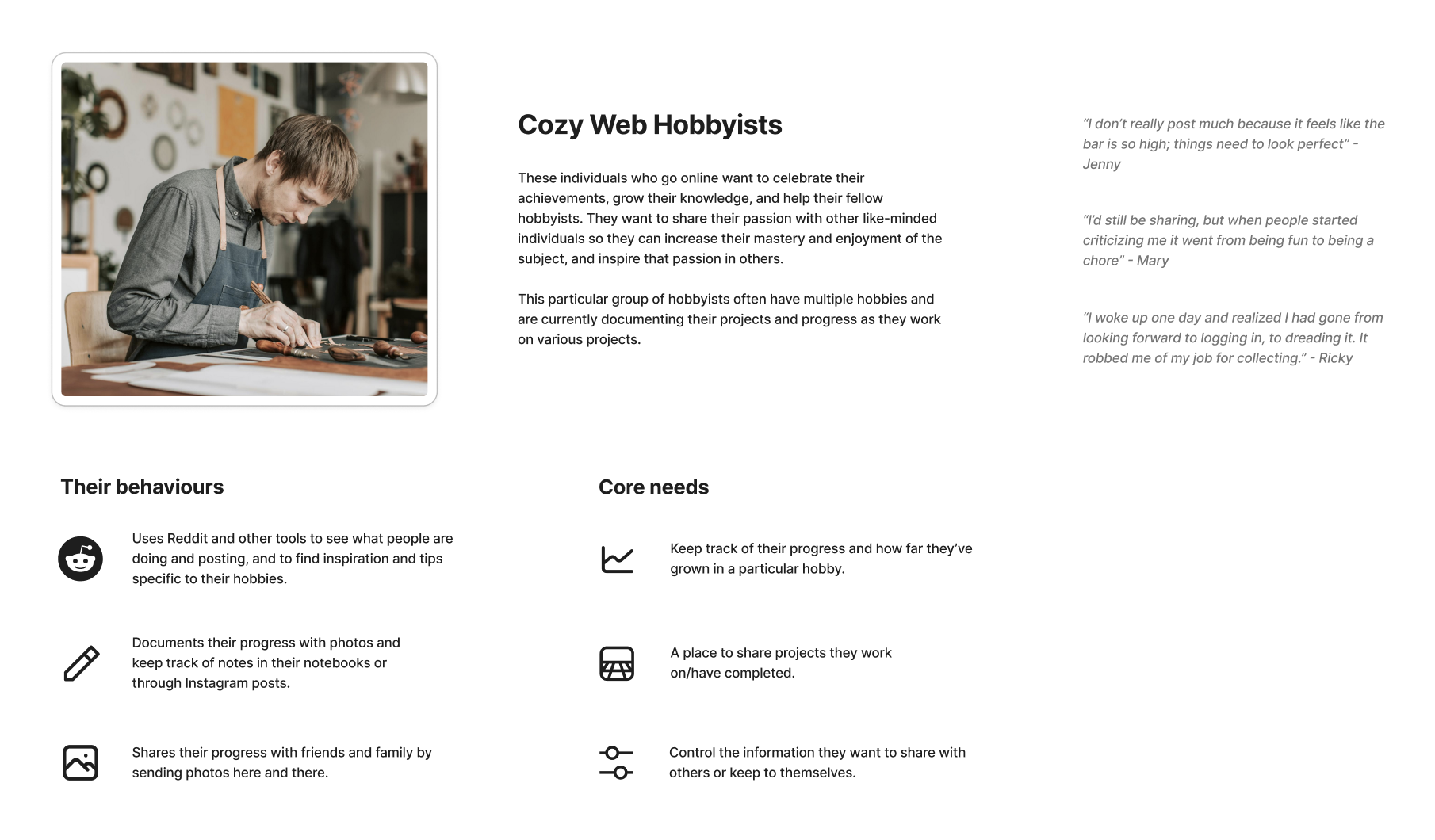
The type of hobbyists we narrowed in on were what we called "Cozy Web Hobbyists" who are:
- Passionate about their hobbies but not trying to monetize them or build a personal brand
- Wanted to connect with others on a smaller scale who share their hobbies
- Aren't tech savvy enough or have the time to build their own website
- Currently use social media but are worried about privacy and toxic comments
Their existing journey online
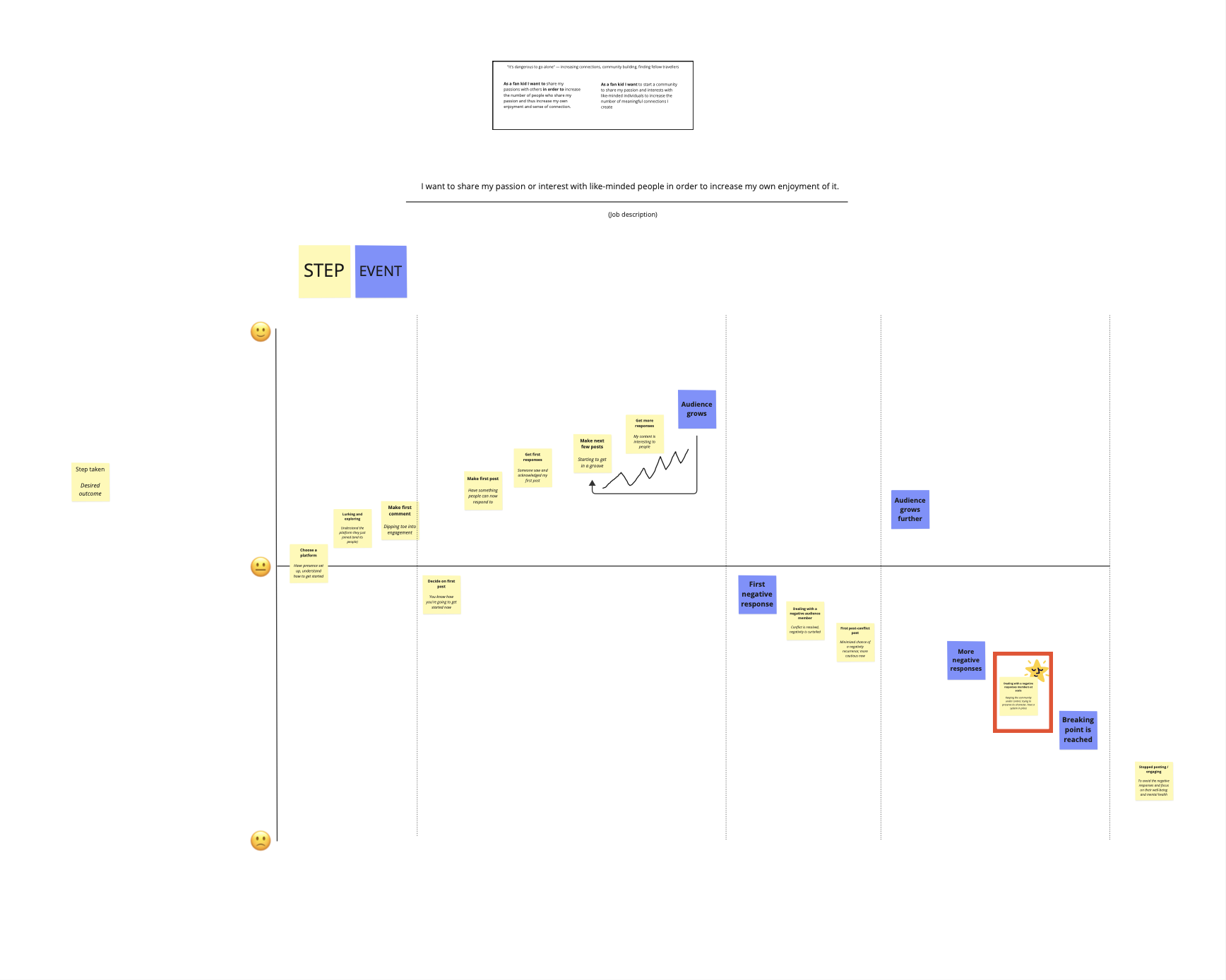
Our team used one of the frameworks from the CDI process to help us understand the existing journey for hobbyists online.
They go through several steps in the journey, from choosing which platform to use to share their hobby projects online, lurking and exploring the platform, leaving their first comment, and making their first post—and as their audience grows, this part of the journey loops over and over again until they encounter their first negative comment.
From there, their experience starts becoming a more negative one as these negative comments start to show up more and more frequently, and they start to question if they should continue to use the platform to share their hobbies online or not. The hobbyists we spoke to would leave their platform of choice and look for a new one or stop sharing online completely.
This exercise gave my team and me room to think about how we could address these issues and figure out how we could make it more positive.
Existing solutions out there
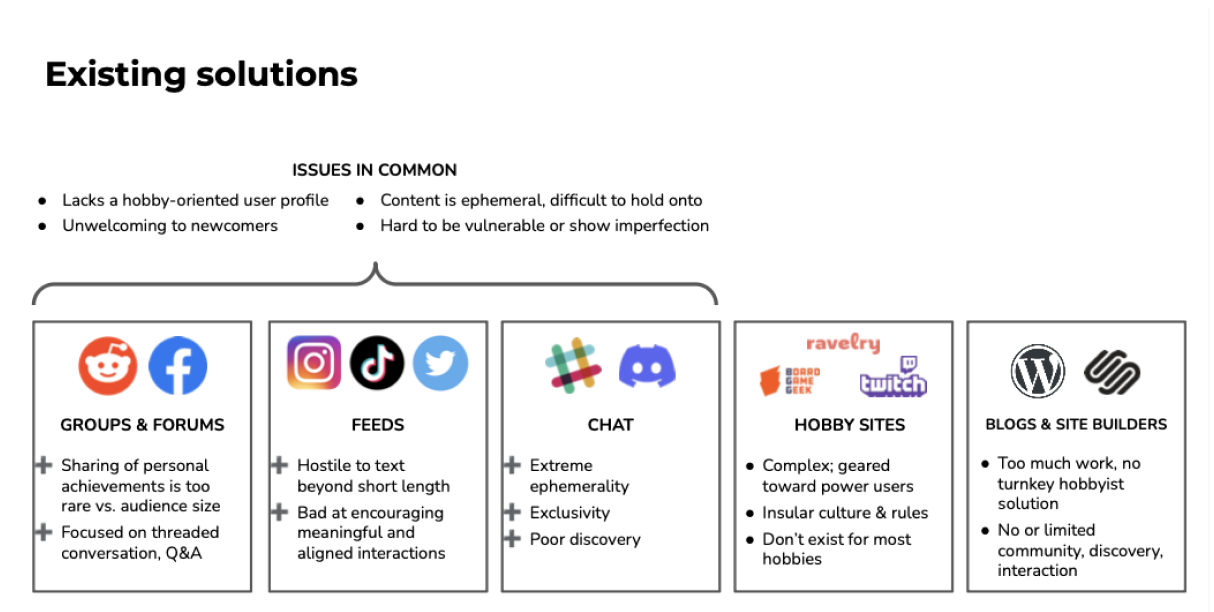
As a team we took a look at the existing solutions out there that our hobbyists are using to post their hobby project updates.
Solutions in the groups and forums, feeds and chat spaces have common issues like: lack of a hobby-oriented user profile, unwelcoming tone for newcomers, ephemeral content that is difficult to hold on to, and difficulty being vulnerable or showing imperfections.
Solutions in hobby sites are complex and geared towards power users while solutions in the blogs and site builders bucket are difficult to set up and use and have limited discoverability.
Where can Mozilla fit into all of this?
At Mozilla, it was important for the organization to create a space and product that promotes civil disclosure, human dignity and individual expression and as an organization we are also committed to an internet that catalyzes collaboration among diverse communities working together for the common good.
Hobbies are a key way that communities of interest connect, interact, express themselves, and collaborate online and no one else is focused on empowering hobbyists and making sure their experience reflects these values.
Focusing on creating a new product for cozy web hobbyists was the right direction and made so much sense as it brought together what Mozilla stands for and what cozy web hobbyists needed.
Testing concepts
Once we had a clear picture of who we were designing for and why, my team and I spent time brainstorming different concepts for what Didthis could look like and what its core experience would be like.
During the brainstorming session, we would vote on the concepts we thought would resonate best with our group of cozy web hobbyists.
The 3 concepts we came up with were:
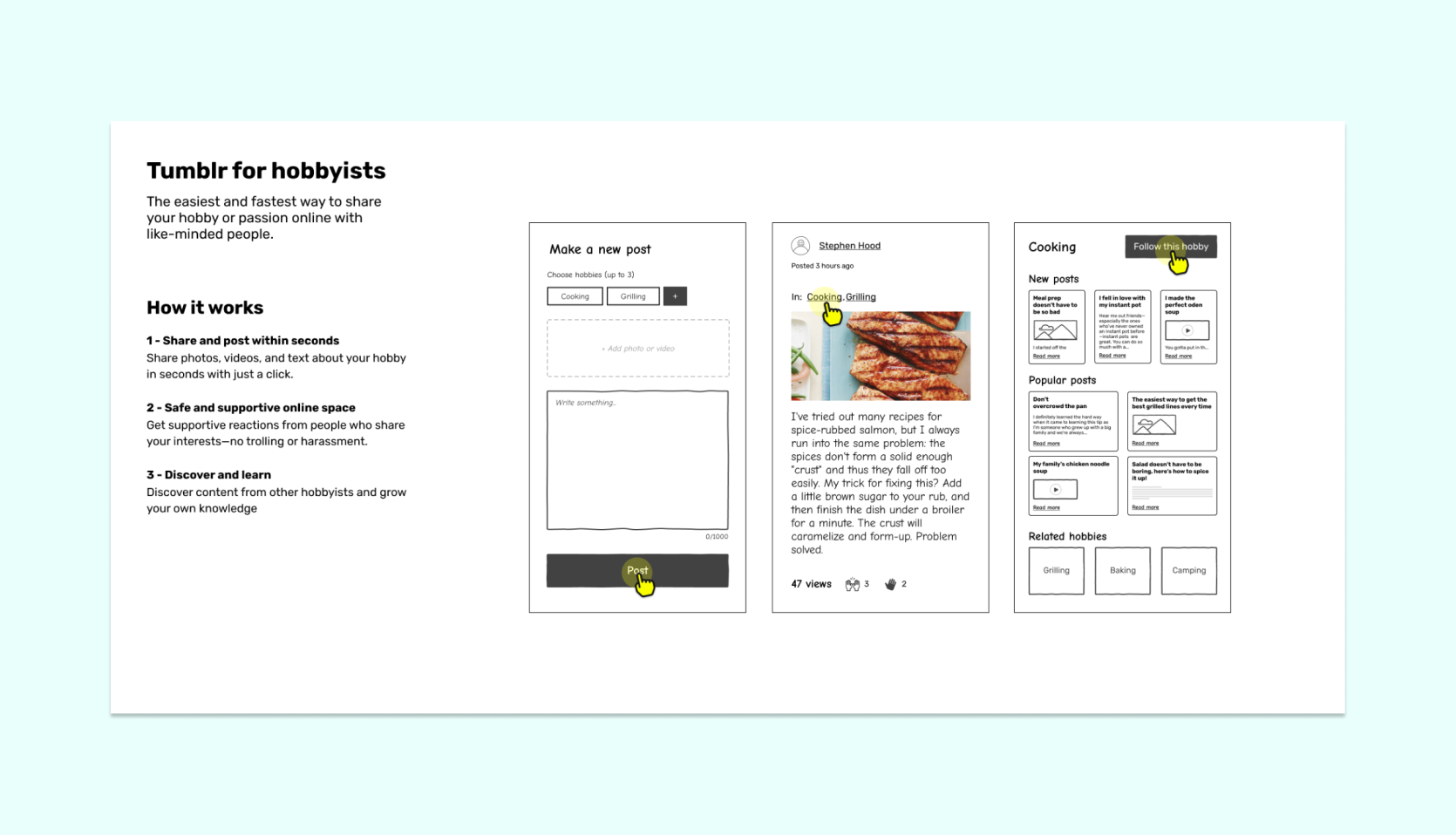
1: Tumblr for hobbyists
A concept that borrows from the familiarity of the Tumblr experience: users can create an account and immediately start posting.
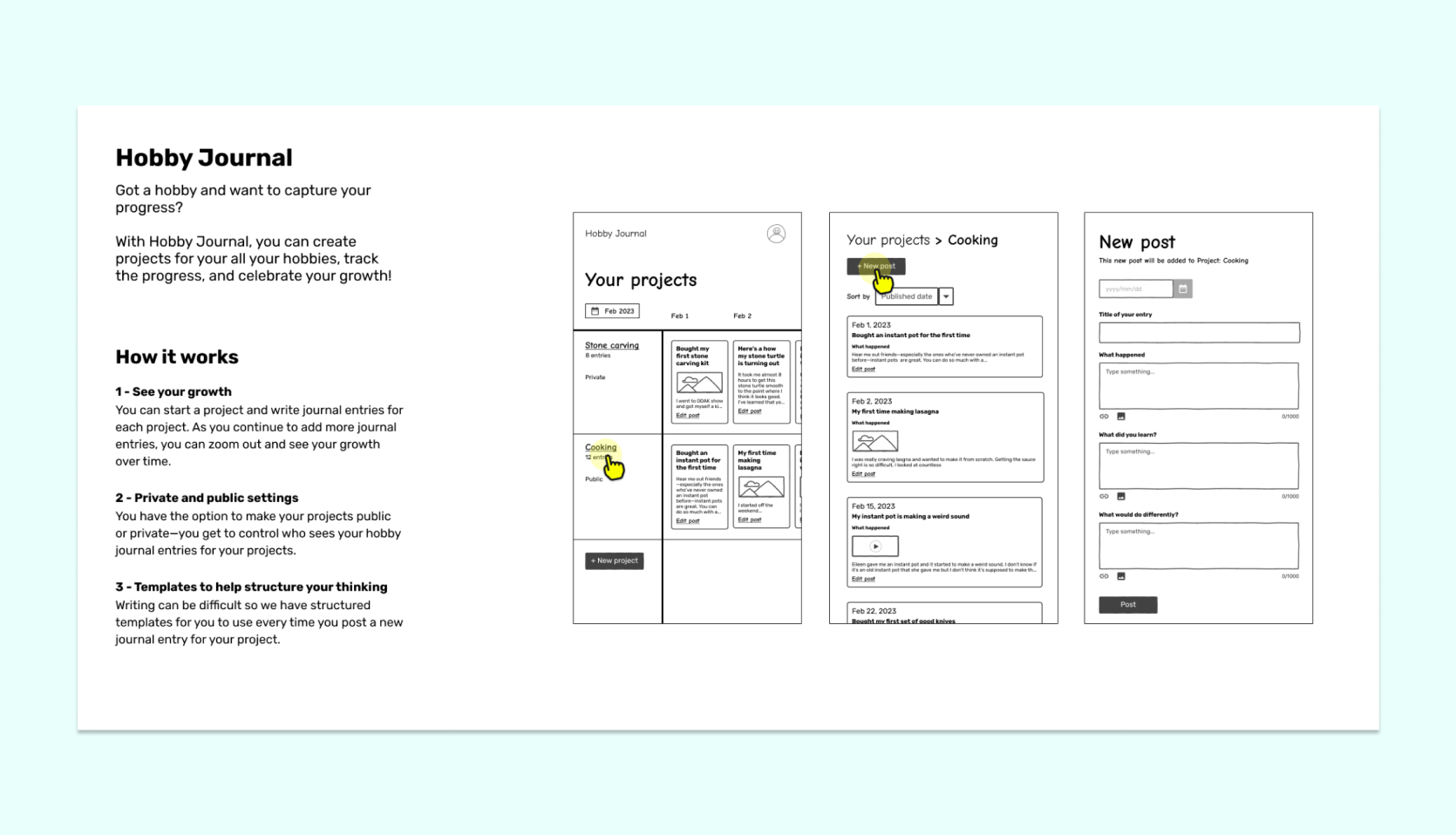
2: Hobby Journal
A concept where users can create projects for all of their hobbies, track their progress and share it with others.
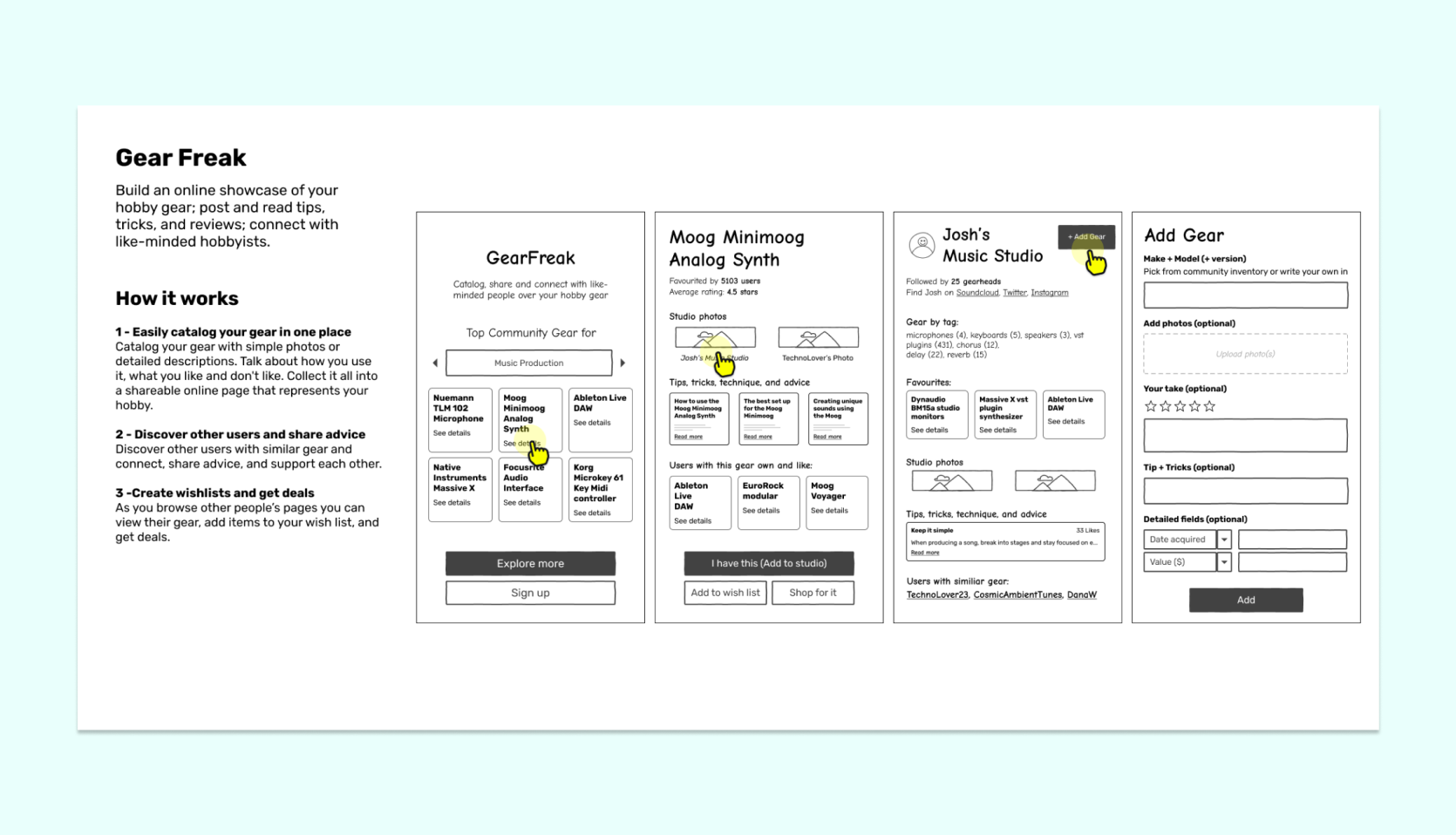
3: Gear Freak
A concept where users can add their gear, tools or instruments online, share it with others and get recommendations.
The feedback we received from the participants was that they liked the concept of a hobby journal the best but liked the features of the other two concepts like:
- Safe and supportive online spaces
- The ability to share their work with others
- Discover and learn from others
We took the feedback from this round of concept testing and used it to start mapping out the core experience for our first prototype.
Frankenstein concept
We took the feedback from the last round of concept testing and combined some of the top ranked features to create one end-to-end clickable prototype that became our demo to show to internal stakeholders and for further testing to help us prioritize the first set of features we would need to build for our MVP to launch and what the ideal core experience would look like.
We called it "Hobby.me".
We showed the following features in the demo: Hobby profile, hobby journal, constructive engagement, hobby-oriented discovery.
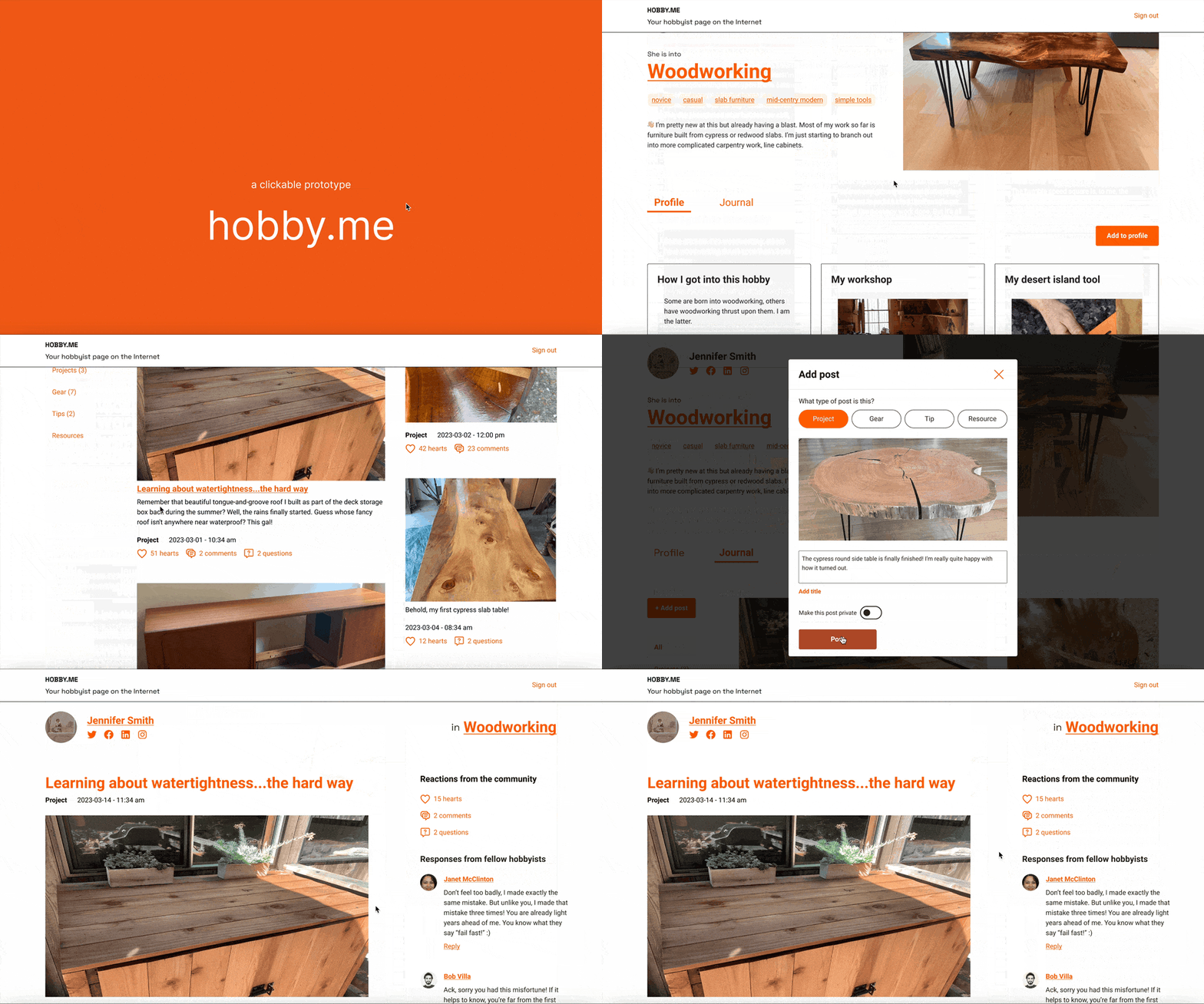
We took the demo and tested it with 42 customers and 12 internal stakeholders and the feedback we received was overwhelmingly positive.
80% of users who tested the demo said they would use the product and 100% of internal stakeholders that we spoke to said they would use it.
This round of testing gave us a signal that we were on the right track and let our internal stakeholders know that this space is still viable and worth investing in.
This looks like a friendlier, more constructive space for my hobby than other places I've been.
I would definitely try this out. I love the discoverability of tools and projects, and it feels like there is an emphasis on my personal narrative and journey in my hobby.
I was going to make my own website but this would be much better, it would instantly connect me to other people in my hobby.
MLP Planning
Keeping the MLP lean and focused
(Yep, we used MLP instead of MVP, which stands for "Minimum Lovable Product")We stripped down the Hobby.me concept to the core features that we needed to build for our MVP so we could have a live experimental product out in the market to test with users who signed up for the waitlist we created.
Our design and build goal was to create the simplest version of the product that validates sharing, engagement, and growth potential.
- Profile with minimal features
- Project journal with minimal features
- Just enough discovery to make it feel like a community
Risks and assumptions
We created a list of risks and assumptions that we needed to consider and to let our leadership team know as we continue to move forward with the MLP build.
- Some hobbyists may not move from their existing online engagement platforms.
- In particular because our engagement and discovery piece requires a lot of experimentation and we might fail to find an "edge" here
- We may come across problematic content too soon and moderation needs could grow to require our team to grow.
- A new player could beat us to the opportunity in the rising tide of new social media offerings, or an incumbent platform could add major features addressing the problem.
- Spam/bot fighting is getting harder and could consume more effort than we expect.
- We might not correctly time our scaling of both architecture and team, leading to either delays or premature optimization.
Creating a simple brand identity to start
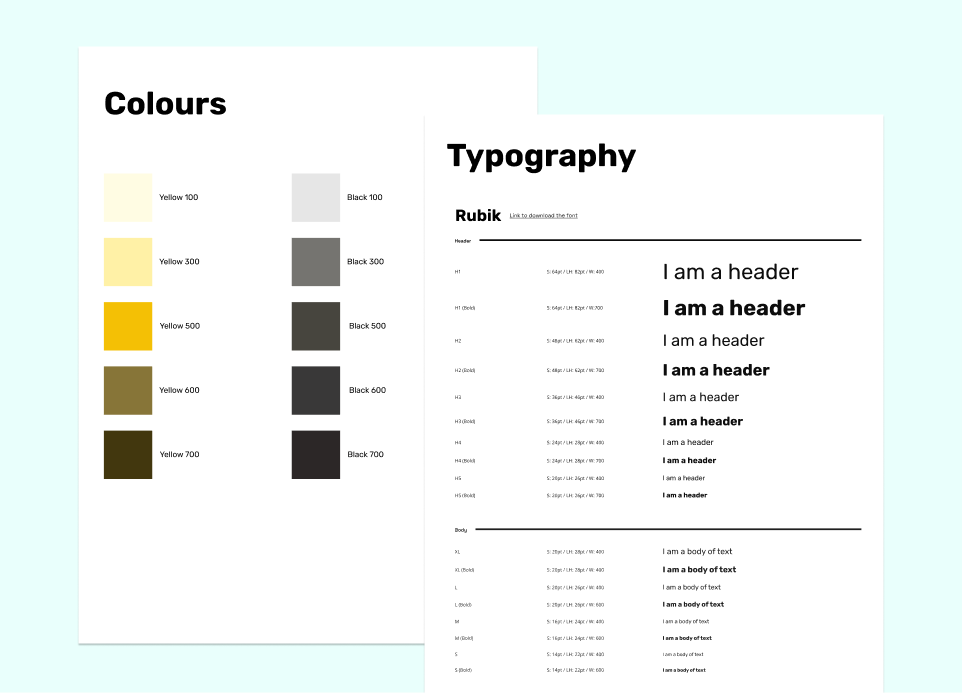
I created the brand identity from scratch and decided to use yellow as the main primary colour. I used yellow because it is a colour that communicates warmth, connection, positivity and community.
The biggest challenge for me was that if you don't use yellow correctly it is bad for accessibility and readability.
What I did was lean into different shades of dark brown to create a set of colours that would be used for any text-related elements in our app and reserve the yellow colours for visual emphasis and to draw the user's attention.
MLP Design
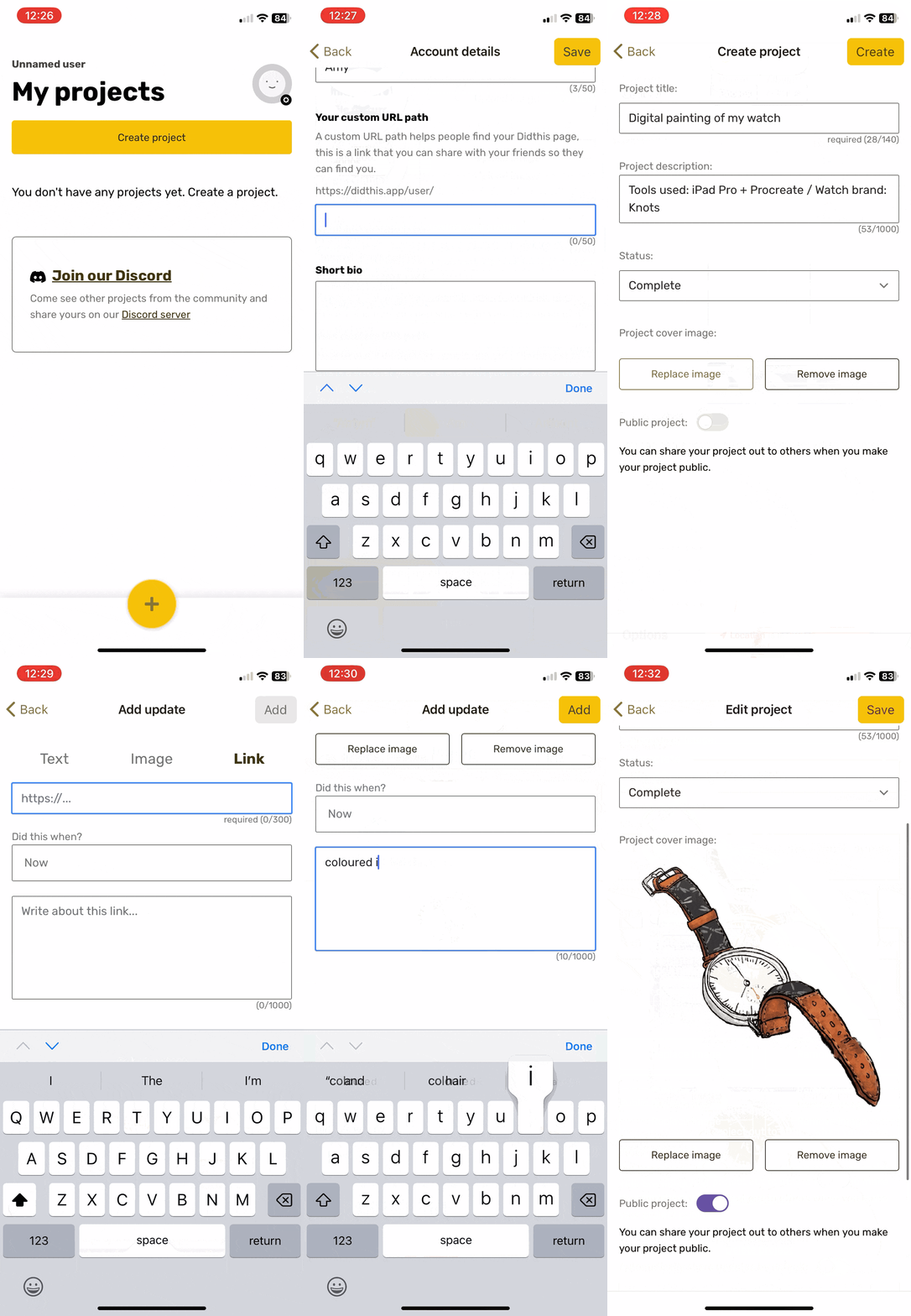
The core loop: create, update, share
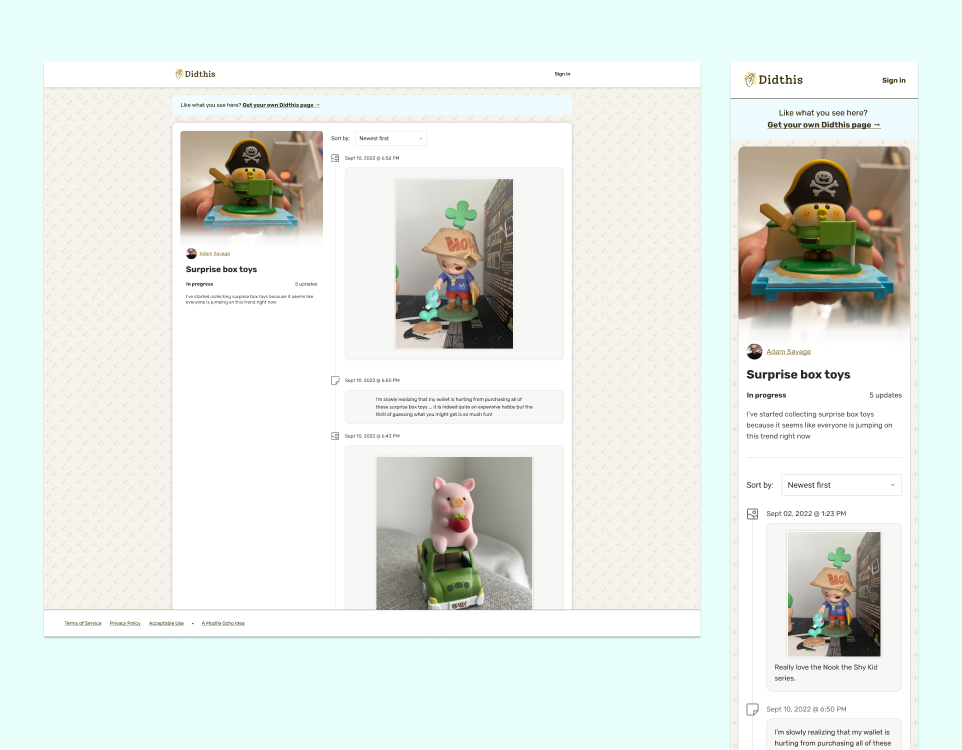
Hobbyists give a project a name, a description, and a hero image. Then every time they make progress, they add an update—a photo, a short note, or a link. It's meant to capture the real, messy process of making things, not just the finished result.
Profile and projects page
Hobbyists have a profile page that displays all of their projects in one place. They can also add a bio and their social media links if they wish.
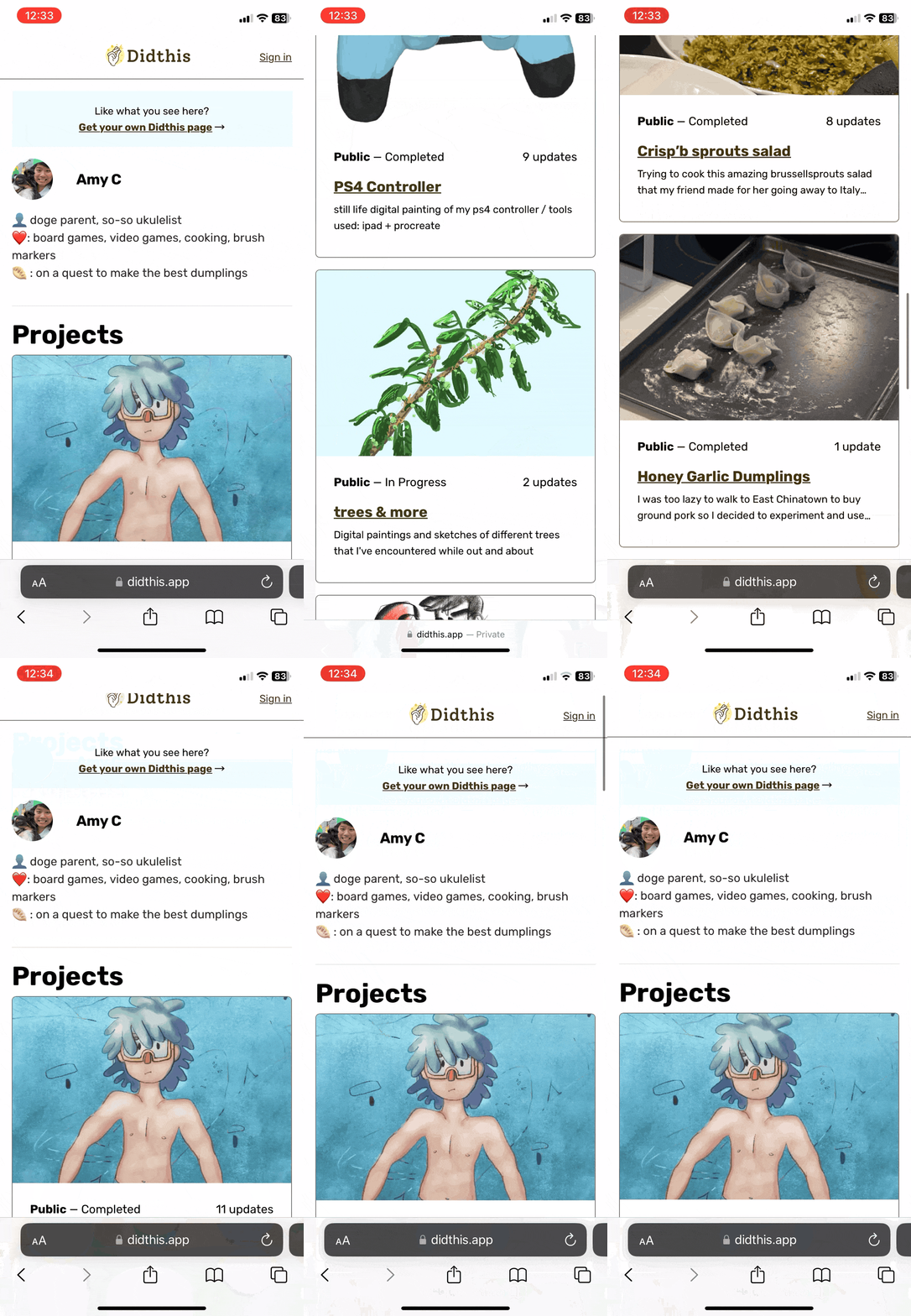
Public pages anyone can see
When a hobbyist shares their project, anyone can see their project page and all of their updates without ever needing to create an account or to log in. Hobbyists can control who sees their project page by setting it public or private as well.
Measures of progress
We created a set of quantitative and qualitative metrics that we wanted to track as a team to help us measure progress and keep us on the right track for the first 3 months of the MLP launch to see if it was viable to continue further with Didthis.
Quantitative metrics
- User acquisition: at least 200 signups
- User engagement: at least 20% of users create at least one post in at least one project
- User retention: at least 10% of users return (>1 week later) to post again
Qualitative metrics
- Collecting comments of praise and criticism from our users through the Discord community and from interviews
- Feature requests coming from our users
Launch & outcomes
DidThis launched in 2024 as an experimental Mozilla product.
Within 2 months of launching, DidThis had:
Total Users
370
Public projects
74
Public posts
395
Discord users
100+
Other project highlights:
We were the first team at Mozilla's New Products pod to ship a working product to market within 1–2 weeks after 3 months of research, ideation, and testing
We launched first as a responsive web app, then followed up with the iOS app, using the web launch to test the market before committing to the native build
People kept showing up — new projects, updates, and a Discord where hobbyists could hang out and share work in real time
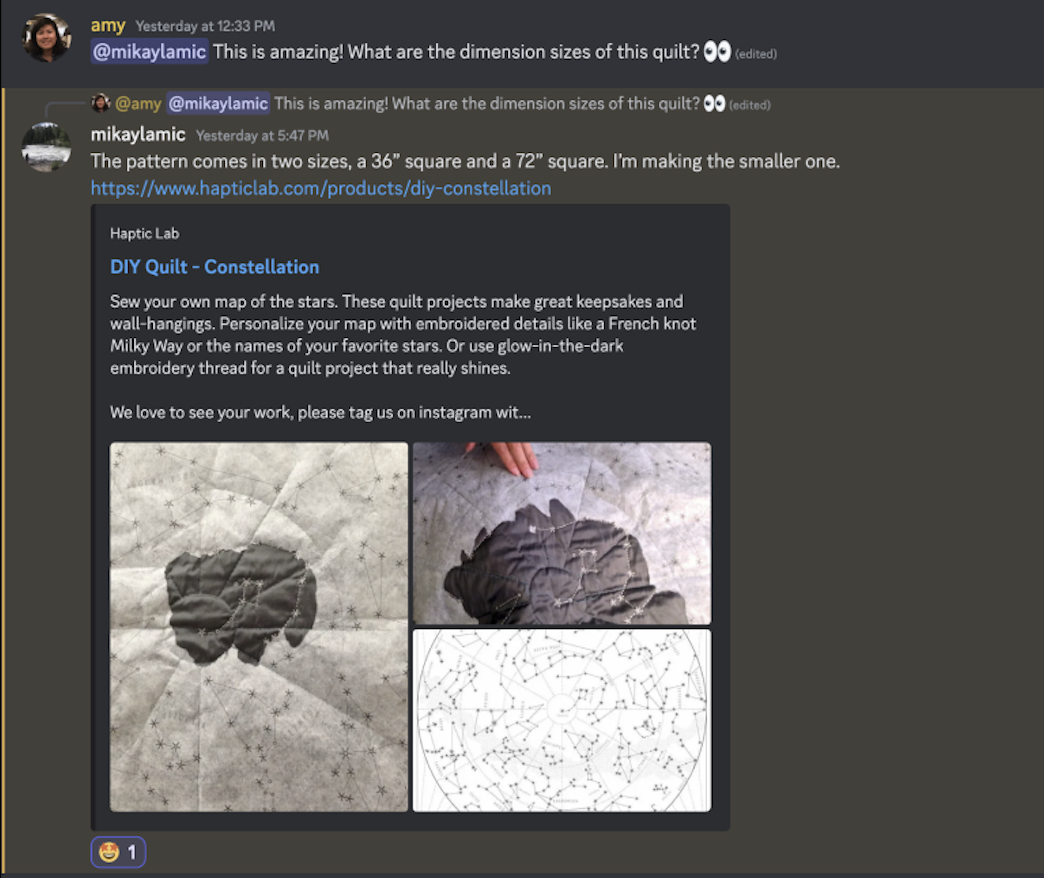
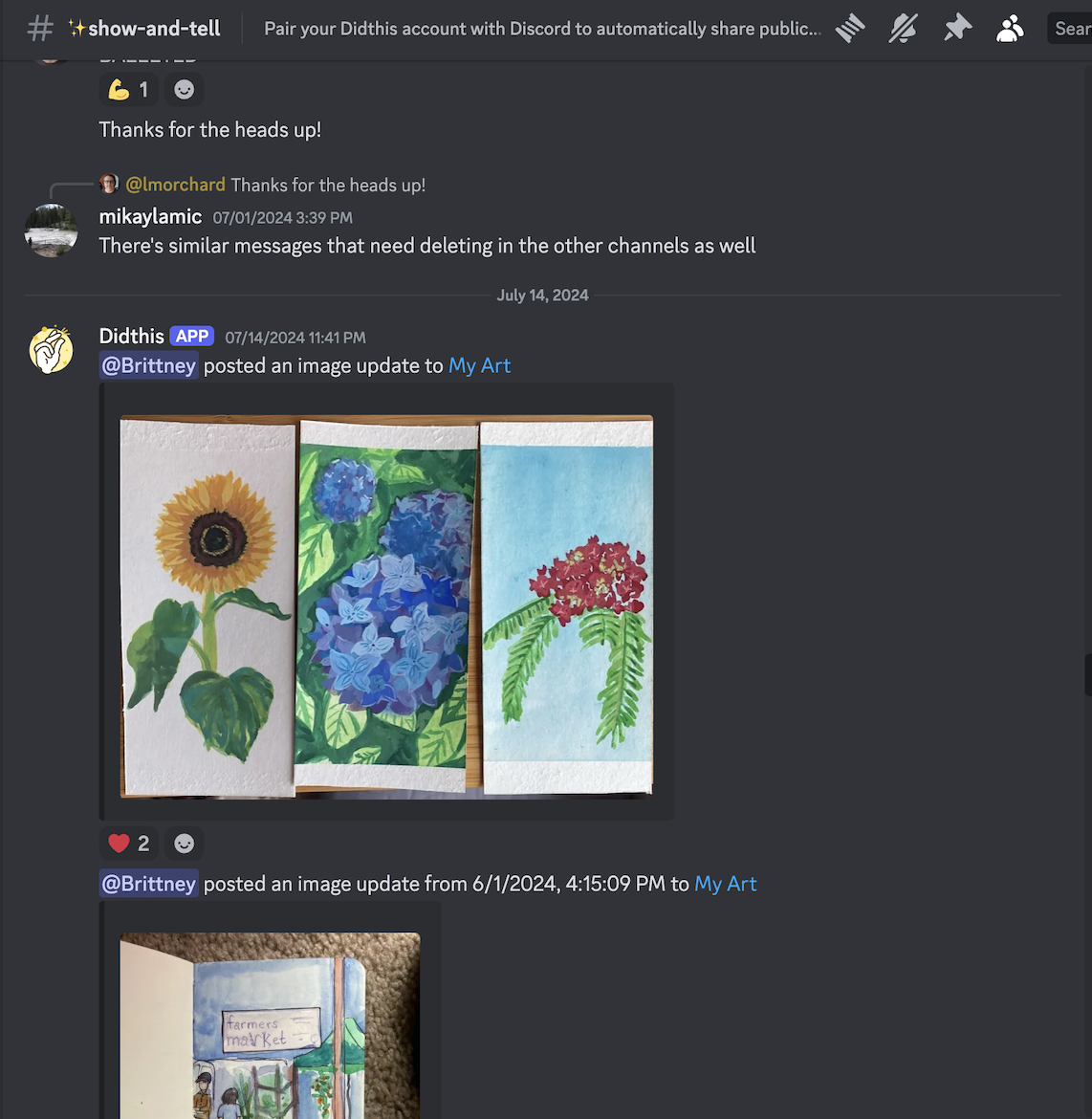
The Discord community we created was cozy and welcoming. We paired the product launch with a community server and a custom Discord bot that let users share their updates directly in the server.
What we found there was genuinely moving — people documenting post-surgery recovery journals, intricate dioramas, constellation quilts tracked stitch by stitch.
Acknowledgements
Thank you to Stephen, our PM — for pushing us forward and helping us navigate the project. And to Josh, our engineer, for leading the engineering efforts.
Thank you to Les for setting up the Discord bot that made our Didthis community feel alive.
Thank you to Setareh and Marianne for lending their research expertise to review our test plans, and working with me to revise questions to help us have better engaging conversations with our participants.
And to Anais and Kate — for jumping in post MLP launch to help us iterate on the product experience.